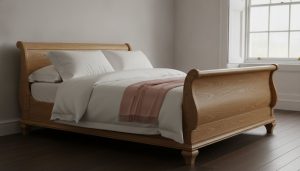
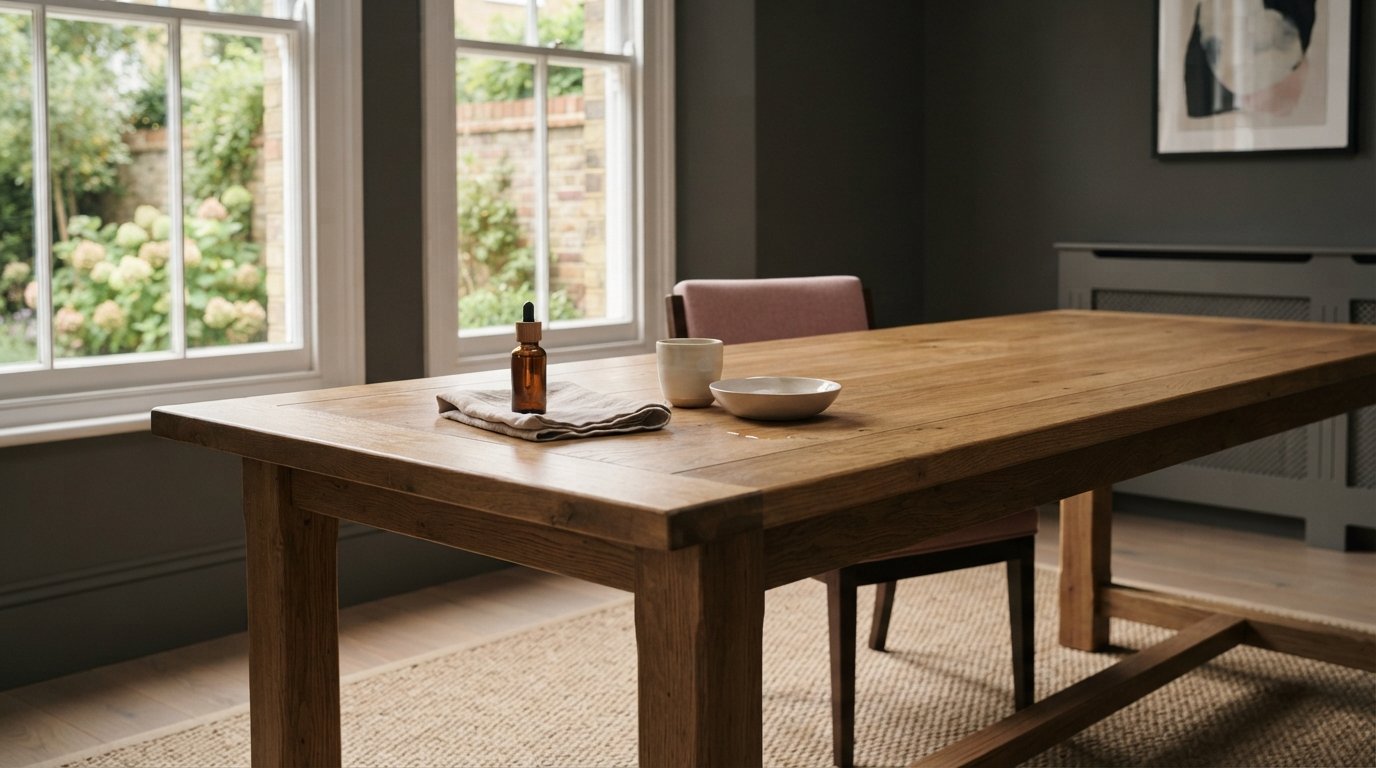
Your solid oak dining table is not a static piece of furniture; it is a living, breathing organic entity that responds to the very atmosphere of your home. Whilst the raw, tactile beauty of a French oak bed frame brings an immediate sense of heritage and luxury to a room, many homeowners find themselves paralysed by the fear of causing accidental damage. You might worry that your central heating will cause the timber to shrink and split, or perhaps you feel overwhelmed by the conflicting advice surrounding caring for natural oak furniture. It’s a common anxiety, but maintaining the prestige of your investment doesn’t have to be a source of stress.
Maintaining these pieces is an art of gentle observation and rhythmic maintenance rather than aggressive cleaning. In this 2026 preservation guide, we’ll share the professional secrets to protecting the structural integrity and lustrous finish of your solid wood pieces. You will discover a clear, manageable routine that ensures your furniture ages with grace, retains its value, and survives the domestic realities of spills and environmental shifts. From understanding humidity levels to selecting the perfect nourishing treatment, we provide the confidence you need to curate a home that feels both elegant and enduring.
Key Takeaways
- Learn why solid oak is a living, responsive material that reacts to your home’s atmosphere and how to identify the hallmark grain patterns of high-quality timber.
- Master the essential environmental rules for caring for natural oak furniture, including the ideal positioning to prevent warping or splitting caused by radiators and direct sunlight.
- Establish a rhythmic maintenance routine using soft, lint-free cloths and professional nourishing techniques to preserve the wood’s natural, tactile lustre.
- Discover the “Golden Minute” rule for handling liquid spills and common household accidents before they become permanent marks on the timber’s surface.
- Understand how investing in superior solid wood construction simplifies long-term care and ensures your pieces don’t lose their value as they evolve into cherished, heirloom-quality furniture.
Understanding the Character and Behaviour of Natural Oak
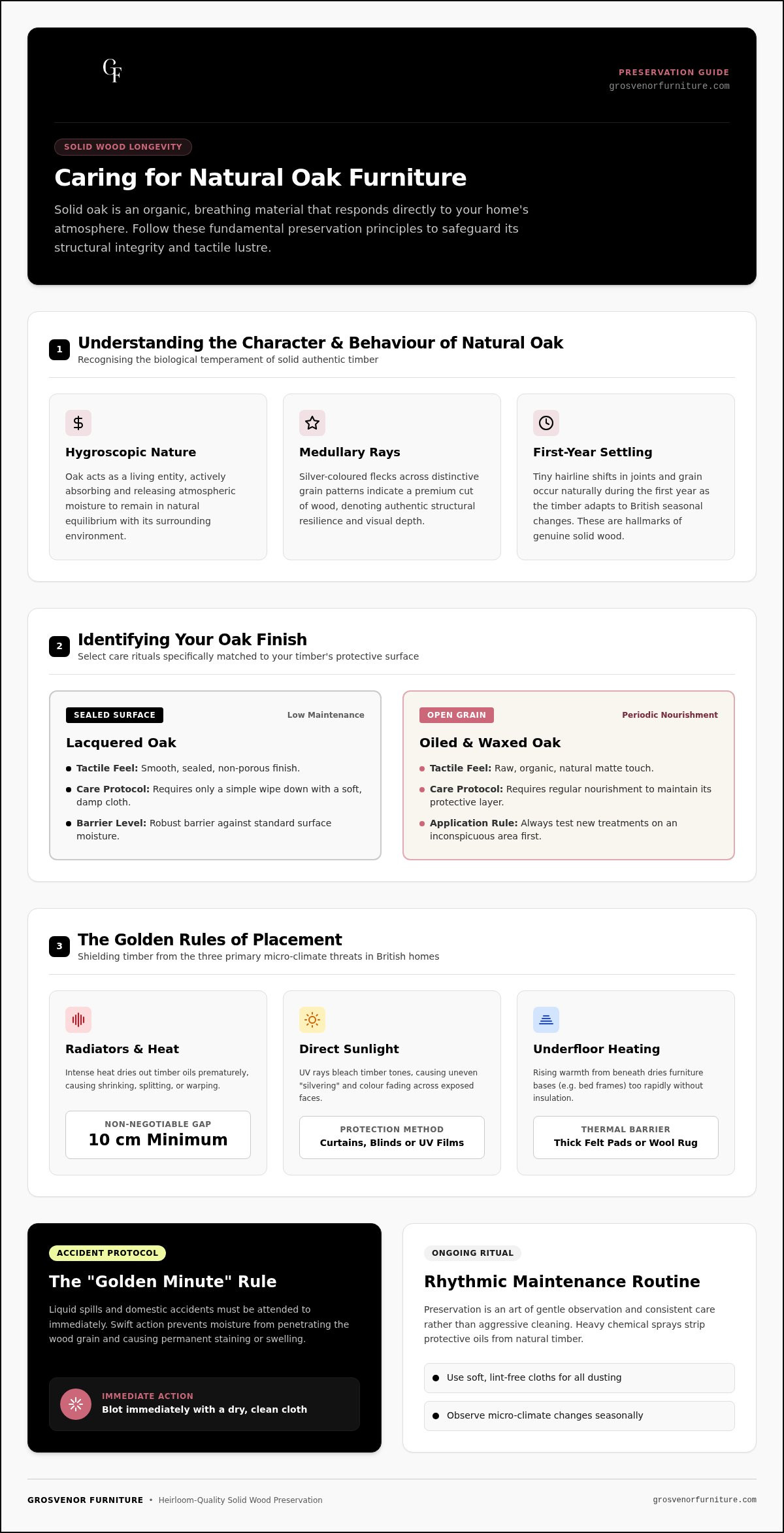
Oak is more than a mere material; it’s a legacy of strength and artistry that continues to evolve long after it leaves the workshop. To master the art of caring for natural oak furniture, you must first understand the biological temperament of the timber. Unlike synthetic alternatives, solid oak is a hygroscopic material. This means it behaves like a living entity, actively absorbing and releasing moisture from the surrounding air to remain in equilibrium with its environment.
This “breathing” process is essential for the timber’s longevity. When you observe a piece of high-quality oak, you’ll see intricate grain variations and silver-coloured flecks known as medullary rays. These distinctive patterns are the natural properties of oak wood, signifying a premium cut that prioritises both beauty and structural resilience. Recognising these hallmarks helps you appreciate that your furniture isn’t a static object, but a responsive part of your home’s ecosystem.
The Science of Wood Movement
In the United Kingdom, our furniture must endure a unique set of atmospheric challenges. From the damp chill of autumn to the dry, intense warmth of winter central heating, the timber will naturally expand and contract. It’s common for new pieces to undergo a “settling period” during their first year in your home. You might notice tiny, hair-line movements in the grain or joins; don’t be alarmed. These subtle shifts are signs of authentic solid wood rather than defects, proving your investment is genuine and organic.
Identifying Your Oak Finish
The specific rituals involved in caring for natural oak furniture are dictated by the finish applied to the wood. Identifying whether your piece is lacquered, oiled, or waxed is the first step in any maintenance routine. Lacquered finishes feel smooth and sealed, providing a robust barrier that rarely needs more than a damp cloth. Oiled or waxed oak, however, feels more tactile and matte. These finishes require regular nourishment to maintain their protective layer. Before you introduce any new cleaning product or wax, always perform a small test on an inconspicuous area to ensure the treatment complements the wood’s natural hue.
Protecting Your Investment: The Golden Rules of Placement
Selecting the perfect spot for your solid timber piece is the most critical step in caring for natural oak furniture. While the aesthetic flow of a room usually dictates layout, the environmental health of the wood must take priority. Oak responds to its micro-climate with surprising sensitivity. High-end pieces, such as our oak bedroom furniture, are built to last generations, but their longevity depends on protection from three primary atmospheric threats: fluctuating humidity, intense heat, and direct ultraviolet light.
Managing Heat and Sunlight
Direct heat is perhaps the most common cause of structural distress in British homes. When a solid wood piece sits too close to a radiator, the timber’s natural oils dry out prematurely. This leads to shrinking, which can eventually cause the wood to split or warp. A minimum gap of 10cm between your furniture and any heat source is a non-negotiable rule. This allows air to circulate, preventing the wood from becoming brittle or stressed by localised temperature spikes.
Sunlight presents a different challenge. UV rays act as a bleaching agent, causing the rich, warm tones of the oak to “silver” or fade over time. If only one side of a table or wardrobe is exposed to a window, you’ll likely notice uneven colouration across the grain. Utilising curtains, blinds, or UV-filtering window films helps maintain a consistent hue across the entire surface of the timber. It’s a simple ritual that preserves the visual depth of the wood for decades.
Humidity and Underfloor Heating
Modern climate control systems, particularly underfloor heating, require a specific strategy. Because heat rises directly through the floor, it can subject the base of a solid oak bed frame to constant, drying warmth. This is a detail often overlooked in standard maintenance guides. To mitigate this risk, use thick felt pads on the feet or place a high-quality wool rug beneath the piece to act as a thermal barrier. These small adjustments prevent the timber from losing its internal moisture too rapidly.
Aim to maintain a consistent relative humidity level between 40% and 60% within your home. In the depths of a dry British winter, a small humidifier can prevent the air from becoming too parched, which is when most wood movement occurs. Conversely, during humid summers, adequate ventilation ensures the wood doesn’t absorb excess moisture. By managing these environmental variables, you create a stable sanctuary where your furniture can age with quiet, enduring confidence.
The Art of Routine Maintenance: Cleaning and Nourishing
Caring for natural oak furniture is a rhythmic commitment, a series of small, mindful actions that preserve the wood’s organic integrity. Rather than viewing maintenance as a chore, consider it a ritual of preservation that rewards you with an ever-deepening patina. We recommend a tiered schedule to ensure your investment remains in peak condition: daily dusting to prevent debris build-up, a monthly gentle clean, and a bi-annual nourishing treatment to replenish the timber’s internal moisture.
One of the most important rules of high-end wood care is to avoid silicone-based supermarket sprays. These products are the primary enemy of solid oak, as they leave a synthetic, plastic-like film that suffocates the wood and prevents it from breathing. Over time, this build-up creates a dull, smeary residue that is notoriously difficult to remove without professional help. Instead, rely on high-quality, natural solutions like pure beeswax or specialist furniture oils that work in harmony with the timber’s biological structure. Sourcing professional-grade products from specialists such as Masters in Wood ensures you are using the correct treatments to preserve the integrity of your investment.
Dust may seem harmless, but it acts as a microscopic abrasive if left to accumulate. When moved across the surface by a stray sleeve or a misplaced book, these tiny particles can cause permanent micro-scratches that dull the finish. Always use a soft, lint-free microfibre or cotton cloth for your daily rounds. The correct technique is simple yet vital: always follow the direction of the grain. This ensures that any particles are lifted away rather than pushed deeper into the wood’s natural pores. For stubborn marks, a slightly damp cloth is effective, provided you never saturate the wood and always dry the surface immediately with a fresh, soft towel.
Nourishing the Grain: Waxing and Oiling
Bi-annual nourishment is the secret to a piece that ages with grace. If you prefer a traditional, soft lustre, high-quality beeswax is the ideal choice. Apply a thin, even layer using a clean cloth, following the grain pattern, and allow it to sit for a few minutes before working it into the timber. For those who favour a more contemporary, matte aesthetic, natural wood oils provide a deep, penetrating hydration that highlights the raw beauty of the oak. Apply the oil sparingly with a lint-free rag, ensuring the wood absorbs the treatment evenly without leaving pools of excess liquid. Buffing the surface with a clean, dry cloth is the essential final step to achieving a professional, non-greasy finish that feels as exquisite as it looks. For enthusiasts looking to master more advanced artisan techniques for characterful timber, FVCreations provides expert advice on preserving the unique features of natural wood.
Accidents are an inevitable part of a home’s history, but they needn’t become permanent scars on your timber. When caring for natural oak furniture, the most vital protocol to master is the “Golden Minute” rule. Because solid oak is naturally porous, any liquid left to sit will eventually migrate into the grain, leading to deep-seated staining or localised swelling. Acting within sixty seconds prevents a simple surface spill from becoming a permanent structural flaw, preserving the pristine condition of your investment.
Emergency First Aid for Oak Surfaces
When a spill occurs, your technique is just as important as your speed. You should never wipe a liquid; doing so merely pushes the moisture across the timber and deeper into the grain’s recesses. Instead, blot the area firmly with a clean, absorbent cotton cloth to lift the liquid directly away from the surface. For those frustrating white heat marks or water rings, which are typically moisture trapped within the finish, a non-invasive remedy involves placing a clean, dry tea towel over the mark and applying a warm iron for several seconds. This gentle heat often draws the trapped moisture out without damaging the wood. Of course, prevention remains the most elegant strategy. Utilising coasters and tailored placemats is essential when hosting, especially to protect the surfaces of luxury dining chairs and dining tables from thermal shock.
Addressing Scratches and Dents
Minor surface imperfections are part of the wood’s evolving character, yet they’re easily managed with the right tools. For shallow scratches, wax repair sticks that match your oak’s specific hue can fill the void and blend seamlessly into the grain once buffed. If you encounter a shallow dent where the wood fibres have been crushed but not broken, the “steam method” is a professional’s secret. By placing a damp cloth over the dent and applying a hot iron briefly, the moisture turns to steam, causing the compressed fibres to swell back to their original position. It’s a delicate process that requires a steady hand to ensure the surrounding finish remains undisturbed.
As the British seasons transition, your furniture requires a mindful atmospheric strategy. The shift from a humid summer to a centrally heated winter is when caring for natural oak furniture becomes most critical, as the wood is most vulnerable to rapid drying. Monitor your home’s environment closely during these months, ensuring that changes in temperature are gradual rather than abrupt. Whilst most domestic issues are manageable, deep-seated ink stains or structural splits require the expertise of a professional restorer. If you’re looking to expand your collection with pieces built for such longevity, explore our range of oak bedroom furniture to find designs that balance durability with a timeless aesthetic appeal.
Longevity and the Grosvenor Philosophy of Quality
The ease of caring for natural oak furniture is fundamentally determined long before a piece enters your home. At the heart of the Grosvenor philosophy is the belief that superior construction is the primary safeguard against the passage of time. Whilst mass-produced alternatives often rely on thin veneers and composite materials that degrade rapidly, solid wood construction offers a density and resilience that naturally resists the stresses of daily life. When a piece is crafted with integrity, the maintenance routine becomes a simple act of preservation rather than a constant battle against structural failure.
Investing in high-quality oak bedroom furniture significantly reduces the need for frequent or invasive repairs. The natural oils and tight grain of premium timber provide an inherent durability that handles environmental shifts with much greater composure than inferior woods. This structural excellence ensures that your furniture remains a steady, reliable presence in your home, allowing you to focus on the aesthetic enjoyment of your space rather than the anxiety of its upkeep.
The Enduring Appeal of French Oak
French oak has long been regarded as the gold standard for luxury bedroom furniture due to its exquisite grain and historical prestige. Unlike many other materials that lose their lustre, oak undergoes a beautiful aesthetic evolution. Over decades, it develops a deep, honeyed patina that reflects the history of your home and the care you’ve bestowed upon it. This character is particularly evident in authentic French style bedroom furniture, where the marriage of traditional craftsmanship and premium timber creates an heirloom that grows more distinguished with every passing year.
Your Next Steps in Home Curation
As you look forward to 2026 and beyond, transitions in your home’s atmosphere should be met with confidence rather than concern. To ensure your collection continues to thrive, consider these final practical steps:
- Audit your environment: Review the placement of your current pieces to ensure they’re at least 10cm away from radiators and protected from harsh, direct sunlight.
- Organise a seasonal care kit: Keep a dedicated set of lint-free cotton cloths, a high-quality beeswax, and a natural wood oil to hand for your bi-annual nourishing rituals.
- Monitor humidity: Consider a simple hygrometer to ensure your rooms stay within the ideal 40 to 60 percent humidity range, especially during the winter months.
Ultimately, caring for natural oak furniture is an investment in the emotional landscape of your home. There is a profound sense of satisfaction in running your hand across a well-maintained surface that feels as smooth and vital as the day it was delivered. By following these professional secrets, you aren’t just maintaining a set of products; you’re safeguarding a legacy of craftsmanship and comfort that will endure for generations to come.
Preserving Your Legacy for Generations
Embracing the organic nature of timber transforms a simple household task into a rewarding ritual of home curation. By mastering the environmental nuances of placement and committing to a rhythmic schedule of nourishing treatments, you ensure your investment remains a radiant centrepiece of your living space. We’ve explored how caring for natural oak furniture is less about aggressive cleaning and more about gentle observation and the prevention of atmospheric stress.
At Grosvenor Furniture, our two decades of expertise in high-end retail inform every piece we select for our exclusively solid wood and French oak collections. We understand that luxury UK interiors demand furniture that is expertly crafted to withstand modern living whilst retaining its heritage charm. Whether you’re tending to a cherished heirloom or looking to begin a new tradition, the right care ensures your home’s story is told through the deepening patina of quality wood.
Discover our curated collection of timeless French Oak Furniture and find a piece that rewards your dedication with a lifetime of beauty. With a mindful approach to maintenance, your furniture will continue to offer comfort and elegance for many years to come.
Frequently Asked Questions
How often should I wax my natural oak furniture?
You should aim to wax your solid wood pieces twice a year, typically in spring and autumn, to maintain a protective barrier. This bi-annual ritual is a cornerstone of caring for natural oak furniture, ensuring the timber remains nourished and resilient against seasonal shifts. Whilst more frequent application might seem beneficial, over-waxing can lead to a dull, sticky build-up. A light, rhythmic application followed by thorough buffing is the most effective approach for long-term beauty.
Can I use multi-purpose cleaning sprays on solid oak?
You should avoid using multi-purpose cleaning sprays on your solid oak investments. These supermarket products often contain silicone and abrasive chemicals that create a synthetic film, eventually suffocating the wood and preventing it from breathing. This residue can lead to a patchy, smeary appearance that is difficult to rectify. Instead, rely on a simple dusting routine. Use a soft, lint-free cloth and specialist wood treatments that respect the timber’s biological structure and maintain its organic lustre.
What is the best way to remove water rings from an oak table?
White water rings are caused by moisture trapped beneath the surface finish, often due to condensation from cold drinks. Whilst the tea towel and iron method described earlier is a professional’s secret for lifting these marks, prevention remains the most elegant solution. Always utilise coasters or tailored placemats to protect the wood from thermal shock and dampness. If a mark is deep-seated, a specialist wood reviver can often penetrate the finish to restore the timber’s clarity and depth.
Is it normal for my oak furniture to change colour over time?
It is entirely normal for natural oak to undergo a subtle colour evolution as it matures within your home. Embrace this beautiful change. Exposure to ultraviolet light and the oxygen in the atmosphere causes the timber to develop a rich, honeyed patina or a soft silvering over time. This transition is a hallmark of authentic wood rather than a defect. To ensure an even change, occasionally rotate items to manage the intensity of direct sunlight across the surface grain.
How can I prevent my oak bed frame from creaking in winter?
Creaking often occurs when central heating dries out the air, causing the timber to shrink slightly and loosen the joints. To prevent this, ensure your room maintains a consistent humidity level between 40 and 60 percent using a humidifier if necessary. You should also check and gently tighten any bolts or fixings at the start of the winter season. This simple adjustment accommodates the wood’s natural movement and ensures your bed frame remains silent, steady, and secure.
Should I use oil or wax on my French oak furniture?
The choice between oil and wax depends on your desired aesthetic and the existing finish of your French oak pieces. Wax provides a traditional, soft lustre and a tactile, protective layer that is ideal for heritage styles. Conversely, natural wood oils penetrate deeper into the grain, offering a matte, organic finish that highlights the raw beauty of the timber. Both are excellent choices for caring for natural oak furniture, provided you use high-quality, silicone-free products.
Is natural oak furniture suitable for rooms with underfloor heating?
Natural oak is suitable for homes with underfloor heating, but it requires specific environmental strategies to prevent the wood from drying out too rapidly. You should avoid placing solid wood pieces directly onto the heated surface without a protective barrier. Using thick felt pads on the feet or positioning the furniture on a high-quality wool rug creates a vital thermal buffer. This allows the heat to dissipate more evenly, protecting the structural integrity and moisture balance of the timber.
What should I do if my oak furniture starts to crack?
If you notice small surface cracks, the first step is to stabilise the room’s humidity to prevent further movement. These minor “shakes” are often a sign that the wood is too dry and needs immediate nourishment with a high-quality wax or oil. For shallow cracks that affect the aesthetic, you can use a matching wax repair stick to fill the void. If the cracking is structural or significant, we recommend consulting a professional furniture restorer to ensure a permanent, safe repair.