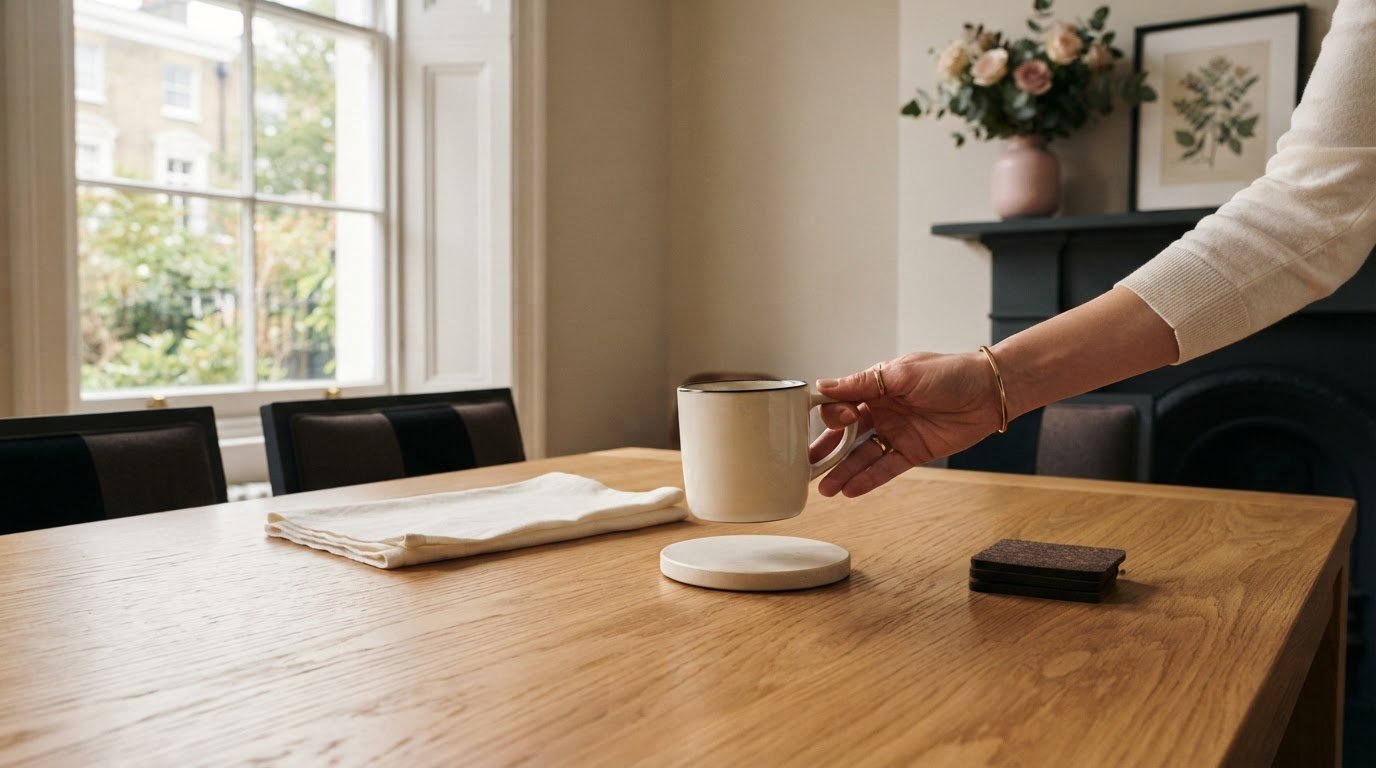
Could the finest scratches on a treasured wooden table begin with something as ordinary as a dusty cloth? A mug slid across the surface, grit caught beneath a vase or a chair nudged against a table can all leave unwanted marks. Even careful cleaning may cause abrasion if dust and grit are dragged over the finish. Knowing how to prevent wood furniture from scratching starts with spotting these everyday sources of contact and friction.
Protecting a favourite piece does not mean hiding its finish or reaching for products that may not suit it. A few practical habits can help: remove grit before wiping, lift rather than drag objects, and use clean protective layers where they are useful. This guide explains how to adapt those steps to different surfaces and uses, so your wooden furniture stays ready for everyday life.
Key Takeaways
- Learn how to prevent wood furniture from scratching by managing grit, contact and movement with a few considered everyday habits.
- Understand where coasters, mats, runners and desk pads can help, and why protective layers need thoughtful use.
- Follow a simple surface-care routine and place protective pads before setting down items that may shift or leave marks.
- Choose a suitable spot for each piece by considering how it will be used and cared for over time.
How to prevent wood furniture from scratching during everyday use
Small changes to how you clean, place and move everyday objects can reduce avoidable scratches without covering the character of the furniture. Focus on four habits: clear away grit, soften direct contact, lift objects when moving them and clean gently. The same principles apply to a dining table, bedside table or dressing table.
- Limit grit: Pick up dust and crumbs before placing or moving objects.
- Soften contact: Use a clean, suitable coaster or soft pad beneath items that could mark the surface.
- Reduce dragging: Lift objects rather than sliding them across the wood.
- Clean gently: Use a clean, soft cloth and follow the furniture’s care guidance.
The right approach depends on the piece’s finish and how it is used. A protective layer or cleaning product that suits one surface may not suit another. Follow the care instructions for the particular item, and avoid applying an untested product or treatment.
Which everyday activities are most likely to leave marks?
Tableware, keys, toys and bags can bring hard edges or fittings into contact with a tabletop, bedside cabinet or dressing table. Even a smooth object can cause a scratch if it is pushed over dust or grit. The particles can rub against the finish as the object moves. Before setting something down, check the surface and the object’s base. Lift it when repositioning it, rather than sliding it across the wood.
What does scratch prevention mean for a finished wood surface?
Prevention reduces the chance of new contact damage. It does not repair a mark that is already there. Put simply, scratch prevention means reducing abrasive contact between a finished wood surface and nearby objects, grit or cleaning materials. A finish is the surface layer, and protective wood finishes can include different coatings. Since care needs vary, use gentle habits and guidance suited to the particular piece rather than applying a treatment without checking it is appropriate.
What causes scratches on wood furniture, and what protective covers can and cannot do
A protective layer can reduce direct contact, but it still needs attention. Fine grit trapped beneath a coaster, mat or ornament may rub against the finish when the item shifts. Repeated sliding can also scuff or wear the surface coating. A visible mark does not necessarily mean that the scratch has reached the wood itself.
How dust, friction and dragging create surface marks
When an object moves across a surface, friction can leave marks, especially if dust or crumbs are caught beneath it. A laptop repositioned on a desk, a serving dish nudged along a table or a decorative bowl moved during cleaning all create repeated contact. Lift objects where practical instead of pushing them. Before placing a mat, coaster or ornament, clear away loose grit from the surface and check the underside is clean.
When can a protective cover cause a problem?
Debris can collect beneath a cover, and an unsuitable material may rub against or affect a finish. Lift mats and runners from time to time to clean both the furniture surface and the underside. Keep coasters and desk pads clean, too. The Canadian Conservation Institute offers guidance on furniture finishes, which can respond differently to physical wear.
Choose protection to suit the task. Coasters work well for individual drinks, while mats and runners cover a dining area. A desk pad marks out a space for writing or working. Each can help limit direct contact, but only if it is clean and appropriate for the surface. Protective layers do not replace the furniture’s care instructions. Polishes and coatings are not universal solutions either, so take account of the wood and finish before using them. These choices are part of how to prevent wood furniture from scratching without introducing a new source of wear.
For a considered setting, explore oak and mahogany furniture alongside protective habits suited to the way each piece will be used.
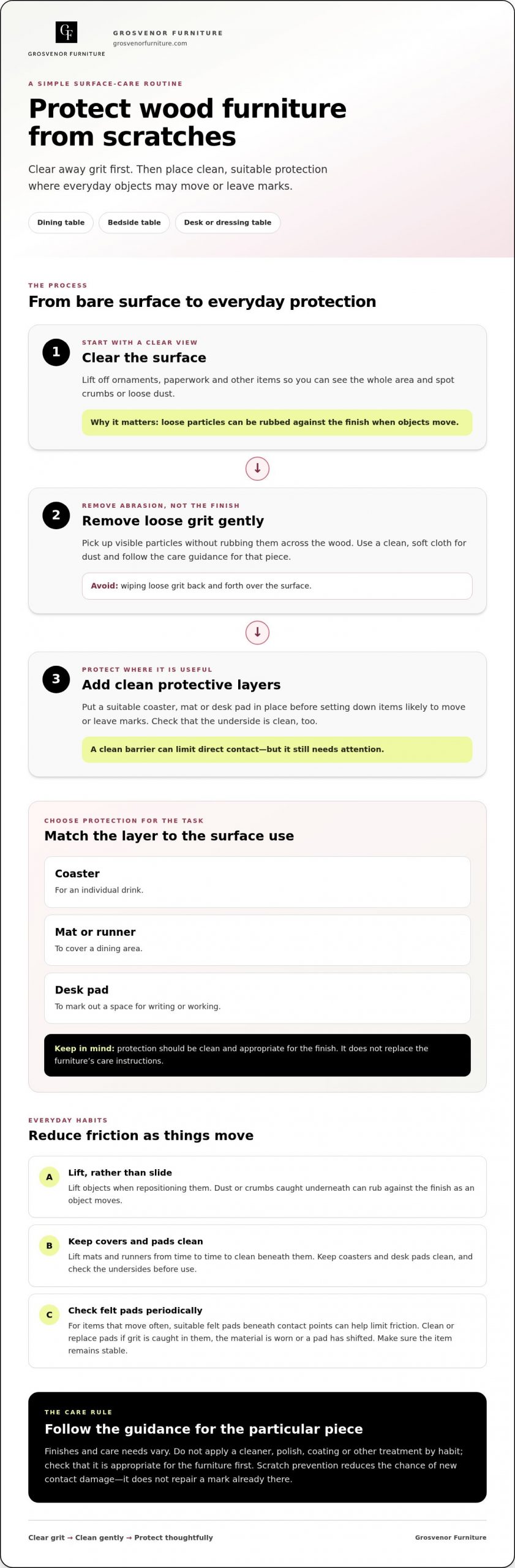
A simple routine to protect wood furniture from scratches
A repeatable routine makes surface care easier, whether you are looking after a bedside table or a dining surface. First remove anything abrasive, then add clean protection where it will be useful. This helps prevent dust and crumbs from being rubbed into the finish during everyday use.
- Clear the surface. Lift off ornaments, paperwork and other items so you can see the whole area and spot crumbs or loose dust.
- Remove loose grit gently. Pick up visible particles without rubbing them across the finish. Use a clean, soft cloth for dust, following the furniture’s care guidance.
- Add clean protective layers. Put coasters, mats or a desk pad in place before setting down items likely to move or leave marks. Check that the underside is clean, too.
How to clean a wooden surface without scratching it
Use a clean, soft cloth, and avoid wiping loose grit back and forth over the surface. If you spot crumbs or grit, lift them away gently before dusting. Do not reach for a cleaner, polish or treatment by habit. Finishes vary, so follow the furniture’s care instructions before applying a product. A cautious routine helps ensure that cleaning does not become another source of abrasion.
How to reduce scratches from furniture movement
When moving a piece, lift it where possible rather than dragging it across the floor. Suitable felt pads beneath contact points can help limit friction for items that move often. Check the pads periodically: grit caught in the felt, worn material or a pad that has shifted may reduce its effectiveness. Clean or replace pads when needed, and make sure the item remains stable.
Consistency matters more than a one-off treatment. Make a quick check of coasters, pads and frequently used surfaces part of your regular tidying. Adjust the routine to suit the finish and follow the furniture’s care guidance. These practical steps show how to prevent wood furniture from scratching while keeping it ready for everyday life. If you are choosing a piece for your home, explore oak and mahogany furniture and consider how its intended use will shape its care.
Make scratch prevention part of a considered furniture choice
Protecting a wooden surface is an ongoing habit, not a one-off treatment or a promise that every mark can be avoided. Before deciding where a piece belongs, consider how often it will be used, what will rest on it and whether people or objects regularly brush against it. A little forethought can make suitable care feel like part of the room’s routine rather than a constant precaution.
Match furniture care to the room and its daily use
A dining table may be used for serving dishes, tableware and frequent clearing. Keep suitable coasters or mats close at hand, and make sure they are clean before use. A bedside table may hold a lamp, a book or items moved each day. Keeping its top uncluttered makes dust easier to spot and clear away. For ideas on selecting pieces for a restful, cohesive room, consult a luxury bedroom furniture guide. For dining areas, a luxury dining chairs guide can help inform the wider setting.
Keep the finish looking considered over time
Regular, light cleaning helps prevent dust and grit from building up. Removing loose particles promptly also reduces the chance that they will be rubbed across the finish. Follow the care instructions for the particular piece, because suitable methods depend on its finish. Do not assume that every wooden surface needs the same product or routine.
Small, consistent habits are a practical answer to how to prevent wood furniture from scratching, while recognising that everyday life may still leave signs of use. Place each piece with its purpose in mind, then care for it in a way that suits its finish. If you are considering a new piece, explore Grosvenor Furniture’s oak and mahogany furniture range as you plan a home that feels welcoming and well cared for.
Choose your next piece with care in mind
A well-loved home is shaped by the furniture you choose and the everyday rhythms around it. When planning a new room or refreshing a familiar corner, consider where a piece will sit, what it will hold and how its finish can be cared for. That practical foresight makes how to prevent wood furniture from scratching part of a considered choice, rather than a worry after a mark appears.
Wooden furniture brings warmth and character to a room. Thoughtful use can help you enjoy it for longer, without expecting its surface to remain untouched. Grosvenor Furniture sells bedroom, dining and living-room furniture online, including oak and mahogany pieces. Consider how each item will fit the room and your daily routine, then give it a place where its purpose and appearance can be appreciated.
Explore Grosvenor Furniture’s oak and mahogany furniture as you plan your next room. Choose a piece that suits your space and routine, then use the simple care habits in this guide to help protect its finish.
Frequently Asked Questions
Can felt pads prevent scratches on wood furniture?
Felt pads can help reduce rubbing when fitted beneath objects that rest on or move across a wooden surface. For how to prevent wood furniture from scratching, choose pads that sit securely beneath the contact points, so an edge or fitting does not touch the finish directly. Check the pads for dirt, wear or shifting, and make sure the object remains stable after fitting.
Is furniture polish a reliable way to prevent scratches?
No. Do not rely on polish as a barrier against scratches. Its suitability depends on the furniture’s finish, and a product intended for one surface may not be appropriate for another. Read the care instructions and product guidance before using it. For everyday prevention, focus on reducing abrasive contact and using clean protective layers where they suit the piece.
Can I repair a scratch on wood furniture myself?
The right repair depends on whether the mark is in the finish or extends into the wood, as well as the furniture’s material and treatment. Do not sand, colour in or apply a repair product until you understand the surface you are dealing with. The wrong method may make the mark more noticeable. For valuable furniture or a prominent scratch, seek advice from a furniture-care professional.
How often should I replace felt pads under furniture?
There is no single replacement interval that suits every piece or household. Inspect pads beneath chairs and other frequently moved items as part of your usual room care, and after moving furniture. Replace any that feel thin, have come loose or look dirty. Before fitting fresh pads, clean the contact point so debris is not trapped between the felt and the furniture.
Do tablecloths prevent scratches on wooden dining tables?
A tablecloth can provide a useful buffer, but it cannot guarantee a scratch-free surface. Fine crumbs or dust beneath the fabric may rub against the finish if the cloth or items on it shift. Keep both the table and cloth clean, and use coasters or placemats beneath individual items that may be moved often. This gives you targeted protection without relying on fabric alone.