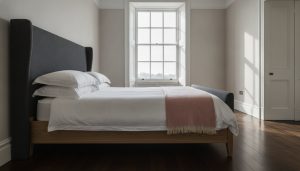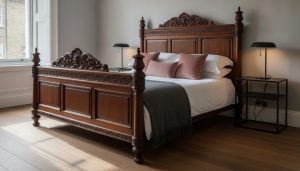
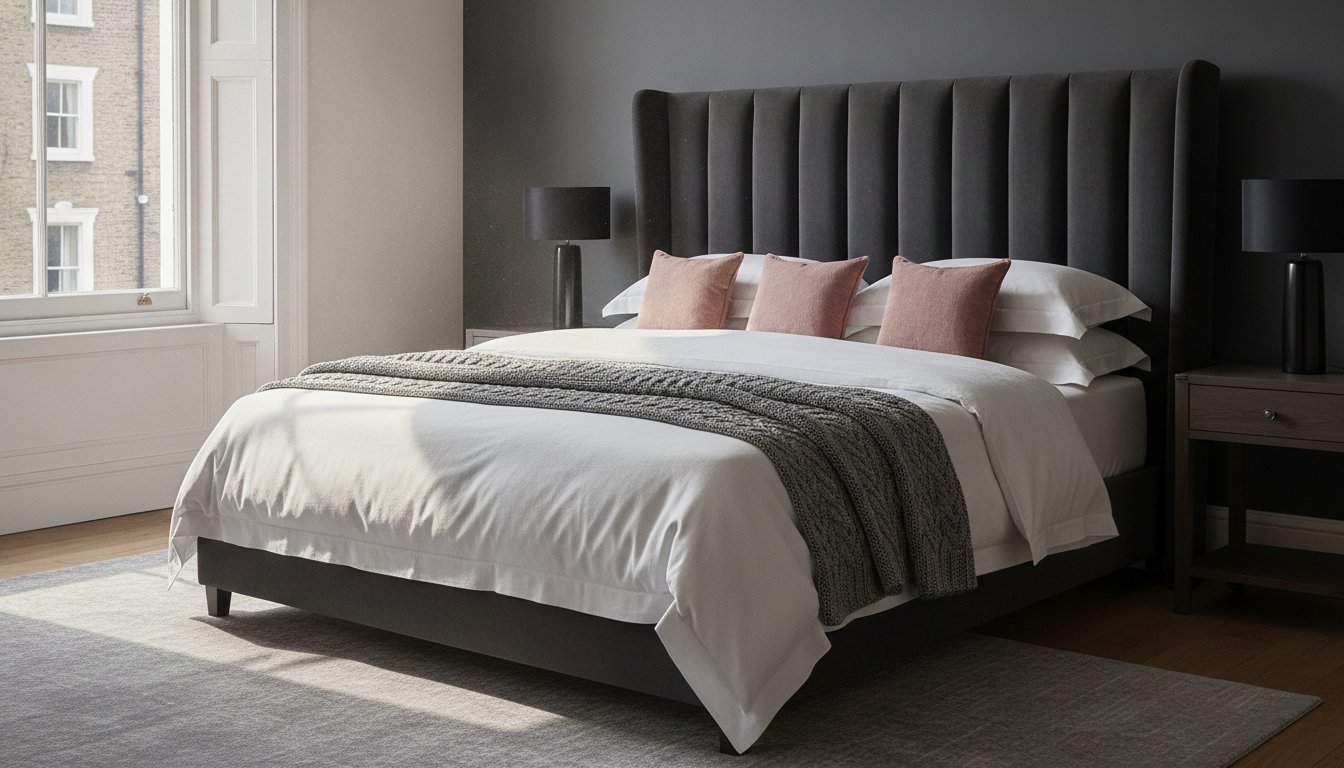
A truly luxurious bedroom isn’t defined by the furniture you can see, but by the profound silence and enveloping softness you can feel. You may have carefully curated beautiful mahogany or oak pieces, yet find the space still feels somewhat sterile, cold, or acoustically sharp. This common frustration often stems from a lack of “soft architecture,” the essential layering of textiles that defines a truly sophisticated upholstered bedroom.
In an era where quiet luxury and tactile depth are paramount, mastering this balance allows you to bridge the gap between heritage craftsmanship and modern comfort. We’ll show you how to blend French oak frames with the rich, sensory textures of velvet and linen to create a retreat that rivals the world’s finest hotels. This guide explores how to improve your room’s acoustics for better sleep and how to maintain these elegant fabrics, whilst ensuring your sanctuary remains timeless, inviting, and impeccably composed.
Key Takeaways
- Learn to transition from sterile, cold aesthetics to a warm, inviting sanctuary by embracing the concept of “soft architecture” in your sleeping space.
- Identify the ideal luxury textiles for your home, from the formal elegance of velvet to the casual sophistication of linen, and how they contribute to essential acoustic comfort.
- Discover how to anchor your upholstered bedroom with a central statement piece and layer it with secondary furniture like ottomans for a cohesive, high-end hotel aesthetic.
- Master a professional maintenance routine that simplifies the care of premium fabrics, ensuring your investment remains pristine, hygienic, and enduring.
- Explore the art of balancing heritage French oak with modern upholstery to create furniture that offers both structural permanence and tactile luxury.
What Defines a Modern Upholstered Bedroom?
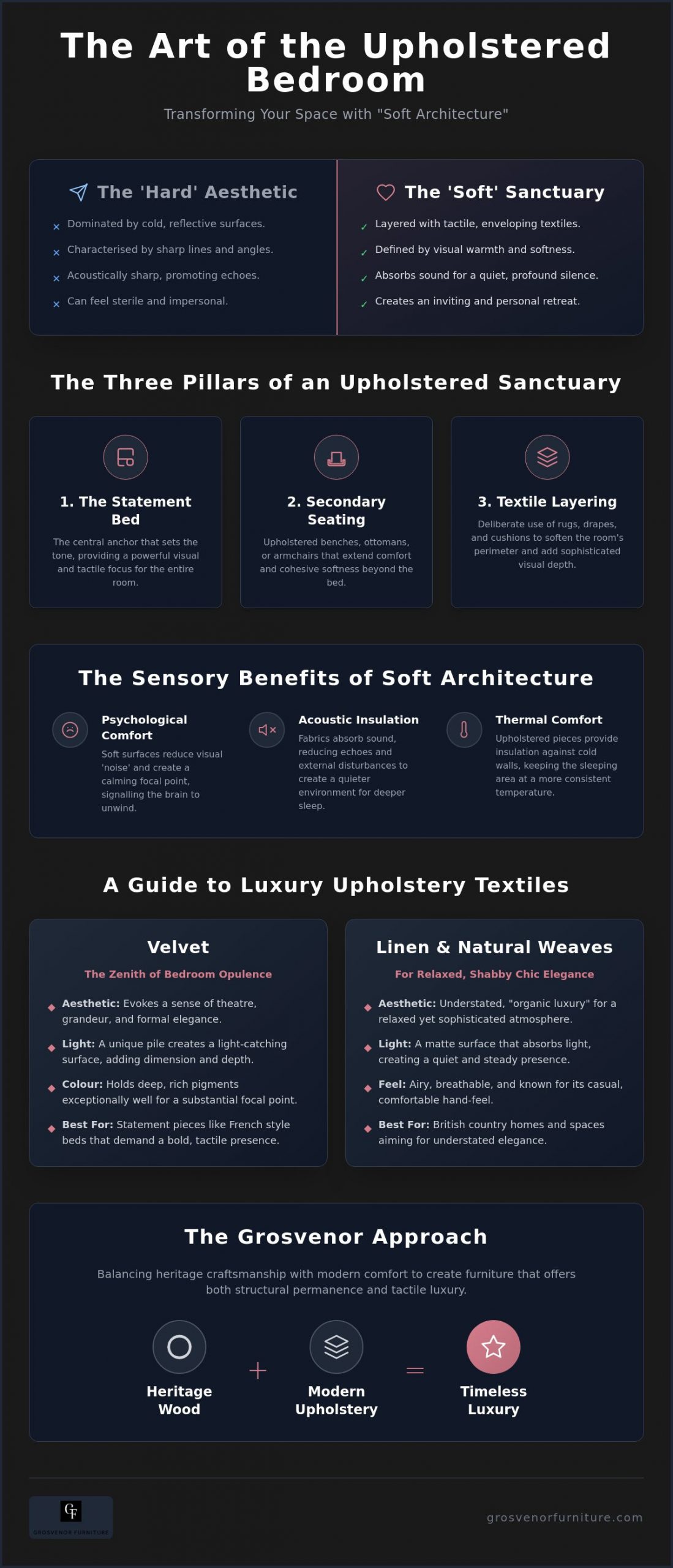
The upholstered bedroom represents a significant shift from the clinical, hard-edged minimalism of previous decades towards a design philosophy rooted in tactile softness and visual warmth. It marks an intentional transition from the “hard” bedroom, where cold surfaces and sharp lines often dominate, to a contemporary “soft” sanctuary. Whilst the history of upholstery reveals its origins as a craft for comfort, its modern application has evolved into a comprehensive aesthetic strategy. An upholstered bedroom is a curated environment where textiles provide the primary structural and sensory focus, bridging the gap between functional furniture and emotional well-being.
Achieving this look requires a balance of three essential pillars. These include:
- The statement bed: The central anchor that sets the tone for the entire room.
- Secondary seating: Upholstered benches or armchairs that extend the comfort beyond the mattress.
- Textile layering: The deliberate use of rugs, drapes, and cushions to soften the room’s perimeter.
This approach ensures the space feels finished and intentional, rather than merely furnished. It’s about creating a room that feels lived-in yet impeccably tailored.
The Sensory Impact of Soft Surfaces
Plush textures in a private space offer a unique form of psychological comfort. In our fast-paced lives, the bedroom is the final retreat. Surrounding yourself with soft, yielding surfaces helps to reduce visual “noise,” creating a calming focal point that signals the brain to unwind. This is the essence of “soft architecture” in high-end British interiors. By replacing hard, reflective surfaces with padded fabrics, the room becomes more than just a place to sleep; it becomes an immersive, tactile experience that prioritises the human touch and personal comfort.
Acoustic and Thermal Benefits
Beyond the undeniable beauty, an upholstered bedroom is a strategic investment in sleep hygiene. Fabric surfaces are exceptional at absorbing sound, significantly reducing echoes and external disturbances to create a quieter environment for deeper sleep. Additionally, upholstered headboards provide a vital layer of insulation against cold exterior walls. This thermal barrier keeps the sleeping area more consistent in temperature throughout the night. It’s a practical, thoughtful approach to design that recognises a bedroom’s primary function is to provide rest, silence, and warmth.
The Anatomy of Luxury Upholstery Materials
The foundation of a refined upholstered bedroom lies in the selection of the textile itself. It’s a decision that dictates the entire atmospheric weight and sensory experience of the room. A distinct hierarchy of luxury textiles exists, ranging from the dramatic depth of velvet to the airy, breathable nature of linen. Wool and heavy-weave cotton also play vital roles, offering a more structured, architectural feel that grounds a space. Each material carries its own “hand-feel” and drape, terms designers use to describe the tactile weight and the way a fabric follows the contours of a furniture frame. When choosing a piece, you aren’t just selecting a colour; you’re choosing how that surface will interact with your bedroom’s lighting scheme. A matte wool will absorb light, creating a quiet and steady presence, whilst a lustrous velvet will dance with shadows, changing character as the day turns to evening.
Velvet: The Zenith of Bedroom Opulence
Velvet remains the undisputed choice for those seeking a sense of theatre and grandeur. Its unique pile creates a light-catching surface that adds incredible dimension to any furniture piece, making it the perfect partner for french style beds. The fabric’s ability to hold deep, rich pigments allows for a focal point that feels both substantial and soft. Whilst traditional velvets were once notoriously delicate, modern high-end weaves offer impressive durability without sacrificing that signature silken touch. If you’re concerned about longevity, following professional textile conservation tips can help maintain the pile’s integrity for years to come. It is the definitive material for those who want their bed to be a bold, tactile statement of luxury.
Linen and Natural Weaves for Shabby Chic Elegance
For a more relaxed, “organic luxury” aesthetic, linen and natural weaves are incomparable. This style is particularly prevalent in British country homes where a sense of understated elegance is preferred over overt opulence. Linen-look upholstery provides a breathable, matte finish that feels cool in summer and warm in winter. These neutral tones effortlessly complement french style bedroom furniture, allowing the natural grain of the wood to share the spotlight. It’s a look that feels lived-in yet curated, perfectly suited for a space designed for genuine rest and recuperation. If you’re looking to begin your transformation, exploring a collection of French Oak Upholstered Beds can provide the perfect starting point for this layered, textile-rich approach to interior design.
Beyond the Bed: Layering Softness Throughout the Room
Whilst the bed is undoubtedly the heart of the home’s most private quarters, a truly cohesive upholstered bedroom extends far beyond a single piece of furniture. To achieve that coveted high-end “suite” feel, one must look at the room as a symphony of soft surfaces. Secondary upholstered pieces act as the supporting cast, transforming a mere sleeping area into a multi-functional sanctuary. A masterfully designed room often relies on the “rule of three” for textures, a principle that ensures visual and tactile depth. By mixing smooth surfaces like sateen, slubbed textures like raw linen, and plush finishes like wool or velvet, you create a rich, layered environment that feels sophisticated rather than flat. This intentional layering also serves a practical purpose, as each additional fabric surface further dampens sound, contributing to the acoustic harmony required for restful sleep.
Integrating these elements requires a keen eye for balance. The goal is to create a space that feels curated amongst a collection of heritage pieces. When you introduce upholstered dressing table stools or reading chairs, you aren’t just adding seating; you’re adding opportunities to introduce new colours and patterns that might be too bold for the bed itself. These smaller items allow for design experimentation whilst maintaining the room’s overall sense of calm and order; you might even consider how original works from Duke Windsor Fine Art Studio can provide a sophisticated visual narrative that complements your choice of textiles.
The Statement Headboard as a Design Anchor
The headboard serves as the room’s architectural anchor. Its silhouette, whether it be a classic winged design, a traditional deep-buttoned finish, or a soft arched curve, dictates the room’s formal tone. In period properties with soaring ceilings, a tall, commanding headboard is essential to bring the proportions of the room into balance. The sheer grandeur of an oak super king size bed becomes even more pronounced when paired with an oversized, upholstered headboard, providing a sense of permanence and security. It’s a design choice that speaks to both heritage and modern luxury, ensuring the bed remains the undisputed focal point of the sanctuary.
Seating and Storage: The Functional Softness
Beyond the bed frame, functional pieces like upholstered storage benches introduce “soft architecture” to the room’s perimeter. An end-of-bed bench provides a practical spot for morning routines whilst hiding away seasonal linens or clutter, maintaining the serene atmosphere of the upholstered bedroom. For those with sufficient space, placing a velvet armchair in a quiet corner creates a “room within a room,” offering a dedicated nook for reflection. These elements are the vital bridge between structural bedroom furniture and the fluid nature of soft furnishings. To ensure these investment pieces stand the test of time, consulting resources on professional textile conservation can provide invaluable insights into preserving the lustre and strength of your chosen fabrics.
Maintaining the Longevity of an Upholstered Sanctuary
Many homeowners hesitate to embrace the full potential of an upholstered bedroom due to a lingering concern over maintenance. There is a common misconception that fabric surfaces are magnets for dust or impossible to clean once a spill occurs. In reality, caring for luxury textiles is simply a matter of establishing a steady rhythm of preservation. By treating your furniture with the same respect as a fine wool coat or a silk gown, you ensure it remains a pristine centrepiece for decades. Modern fabric protection treatments have also revolutionised the longevity of these pieces, creating an invisible barrier that prevents liquids from immediately penetrating the fibres.
Sunlight exposure is another factor that requires a curated approach, especially when your upholstered pieces sit amongst darker mahogany bedroom furniture. Whilst the deep tones of mahogany are resilient, ultraviolet rays can cause certain fabric pigments to fade or become brittle over time. Positioning your bed away from direct window glare or utilising high-quality window dressings can mitigate this risk. This thoughtful placement protects the vibrant lustre of your textiles, ensuring the visual warmth of your sanctuary remains consistent throughout the seasons.
Daily and Weekly Care Routines
Simple maintenance begins with the right tools. Use a soft brush attachment on your vacuum cleaner once a week to gently remove airborne particles before they settle into the weave. This prevents the fibres from becoming dull or abrasive. Plumping your upholstered headboards and benches is equally vital. Just as you would with a premium sofa cushion, a quick daily adjustment maintains the crisp silhouette and prevents the internal padding from migrating. For accidental spills, always keep a British-standard fabric cleaner to hand. Remember to blot the area with a clean cloth rather than rubbing, which can damage the delicate nap of the fabric.
Choosing Fabrics for Durability
Understanding the technical specifications of your furniture offers essential peace of mind. The Martindale rub test is a standard industry measure that simulates natural wear and tear. Whilst a score of 15,000 is acceptable for light domestic use, the most enduring luxury beds UK often feature fabrics with a much higher rating. These pieces utilise higher-gsm (grams per square metre) textiles, indicating a denser, more substantial weave that resists pilling. For high-traffic guest rooms, synthetic-blend velvets provide a brilliant solution. They offer the same visual depth as traditional silk velvet but with significantly improved resilience against the rigours of daily life.
Explore our curated collection of French Oak Upholstered Beds to find a piece that marries enduring craftsmanship with effortless elegance.
The Grosvenor Approach: Heritage Wood Meets Modern Upholstery
At Grosvenor Furniture, our design philosophy is built upon a fundamental understanding of structural integrity and sensory delight. We view the creation of an upholstered bedroom as a marriage of two distinct but complementary forces. If the solid timber frame provides the robust skeleton of a piece, then the premium upholstery represents its soul, the element that brings warmth, character, and softness to the home. By curating pieces that marry the enduring strength of solid French oak with the finest luxury textiles, we offer more than just furniture; we provide the foundation for a life lived in comfort. This approach ensures that every item in our collection is as durable as it is beautiful, reflecting a commitment to heritage craftsmanship that remains attuned to the needs of the modern homeowner.
Choosing an online-only specialist allows you to access a level of expertise and a curated selection that high-street retailers often struggle to match. We’ve refined our process to ensure that the journey from discovery to delivery is as seamless as the finish on our velvet headboards. This isn’t merely a purchase; it’s a long-term investment in your personal well-being and the sanctuary you call home.
Why French Oak and Upholstery are the Perfect Match
The visual contrast between the natural, open grain of French oak and the refined softness of linen creates a sophisticated tension that defines high-end interiors. Whilst the wood provides a grounding, earthy presence, the fabric introduces a layer of light and texture that prevents the room from feeling overly heavy. For those who prefer a more dramatic aesthetic, the deep, lustrous tones of our mahogany bedroom furniture provide a stunning backdrop for cream or silver velvets. Every piece features handcrafted wooden frames, where ornate carvings are softened by the padding of the upholstery, ensuring that the artistry of the woodworker and the skill of the upholsterer are showcased in perfect harmony.
Designing Your Sanctuary with Grosvenor
Creating a cohesive upholstered bedroom is made effortless when you can coordinate your central statement piece with matching chests of drawers and bedside tables. Our collections are designed to work together, allowing you to build a suite that feels personal and polished. We understand that large-scale furniture requires a delicate touch, which is why our national delivery service is tailored to handle these investment pieces with the utmost care. You don’t have to worry about the logistics of moving substantial oak frames; we ensure your new sanctuary arrives safely at your door, ready to transform your space.
Discover our curated collection of French oak and upholstered beds to begin your transformation.
Transforming Your Sleep into a Sensory Experience
An upholstered bedroom is more than a mere design choice; it’s a commitment to a lifestyle of quiet confidence and profound comfort. By mastering the delicate balance between the structural permanence of heritage woods and the yielding softness of premium textiles, you create a space that nourishes both the senses and the spirit. You’ve discovered how the right choice of velvet or linen can dampen sound and provide thermal insulation, whilst a consistent care routine ensures your investment remains a source of pride for years to come.
Since 2003, Grosvenor Furniture has brought decades of expertise to the curation of premium French oak and mahogany pieces. We understand that true luxury lies in the details of the grain and the weight of the weave. With our national UK delivery service, bringing this level of refined artistry into your home has never been more effortless. It’s time to move beyond the sterile and embrace a room that feels as good as it looks.
Explore the Grosvenor Furniture Collection of Luxury Upholstered Beds and begin the journey toward your own timeless sanctuary. Your retreat awaits.
Frequently Asked Questions
What are the main benefits of an upholstered bed frame?
Upholstered bed frames provide exceptional acoustic dampening, physical comfort for reading in bed, and a tactile softness that hard frames cannot replicate. They function as a vital component of “soft architecture,” absorbing ambient noise to create a quieter, more restful environment. This combination of sensory appeal and practical benefit transforms a standard sleeping area into a sophisticated retreat that prioritises your personal well-being.
Is an upholstered bedroom harder to keep clean than a wooden one?
Maintaining an upholstered bedroom is not significantly more difficult than caring for wooden furniture, provided you establish a simple, consistent care routine. Whilst wood requires regular dusting and occasional polishing, fabric surfaces benefit from a weekly vacuum with a soft brush attachment. Modern fabric protection treatments also create an invisible barrier, making it much easier to blot away spills before they can penetrate the fibres.
How do I choose the right fabric colour for my bedroom furniture?
Choosing the correct fabric colour involves balancing the existing wood tones in your room with the amount of natural light available. Neutral shades like oatmeal, stone, or cream offer a versatile foundation that enhances the airy feel of French oak furniture. If you prefer a more dramatic or intimate atmosphere, deeper tones such as charcoal or navy velvet can provide a striking focal point that anchors the space.
Can I mix an upholstered bed with existing mahogany furniture?
You can elegantly mix upholstered beds with existing mahogany pieces to create a curated, heritage-inspired aesthetic. The dark, rich pigments of mahogany provide a beautiful, dramatic backdrop for lighter textiles like silver velvet or natural linen. This contrast prevents the room from feeling monochromatic or overly heavy, adding a layer of contemporary luxury to your traditional wooden pieces whilst maintaining a sense of timeless elegance.
What is the most durable fabric for an upholstered headboard?
Synthetic-blend velvets and high-gsm woven fabrics are considered the most durable options for an upholstered headboard. These materials are specifically engineered to withstand the friction of daily use whilst maintaining their lustre and shape. When selecting a fabric, check for a high Martindale rub test score, which serves as a reliable indicator of the material’s resistance to pilling and thinning over many years of contact.
Do upholstered beds make a room feel smaller?
Upholstered beds do not automatically make a room feel smaller, though their visual weight is often greater than metal frames. To maintain a sense of space in a more compact room, opt for a bed with a lower footboard or a light-coloured fabric that reflects light. A tall, arched headboard can actually make a room feel larger by drawing the eye upwards, successfully emphasising the height of the ceiling.
How long does a luxury upholstered bed typically last?
A luxury upholstered bed constructed with a solid timber frame can typically last between fifteen and twenty years with appropriate maintenance. The lifespan of the piece is dictated by the quality of the internal “skeleton” and the durability of the chosen textile. Investing in a bed with a high-gsm fabric ensures that the surface remains pristine and comfortable, making it a sound long-term investment for your home. For a wide selection of durable and stylish sleep solutions, you can visit Hello Beds to find the perfect match for your bedroom.
Are upholstered beds suitable for people with allergies?
An upholstered bedroom is suitable for those with allergies if the fabrics are vacuumed weekly to prevent dust from settling. Tightly woven textiles like linen or high-quality velvets are less likely to trap allergens than loose, shaggy weaves. Regular steam cleaning can also be employed to ensure the environment remains hygienic and fresh, providing a safe and comfortable sanctuary for everyone in the household.